About me
About me
Hi! I am Lorenzo Pompili, a Research Fellow at the Nottingham Centre of Gravity and at the School of Mathematical Sciences of the University of Nottingham, working on gravitational-wave astrophysics. I completed my PhD in 2025 at the Astrophysical and Cosmological Relativity Department of the Max Planck Institute for Gravitational Physics in Potsdam, under the supervision of Prof. Alessandra Buonanno.
I am a member of the LIGO Scientific Collaboration, the Einstein Telescope Collaboration — where I coordinate the Waveforms Division of the Observational Science Board — and a member of the LISA Consortium.
I am originally from Perugia, Italy, where I completed my undergraduate studies in Physics and went on to earn a Master’s in Theoretical Physics at the University of Perugia.
News

My work
My research lies at the intersection of gravitational-wave modeling and data analysis.
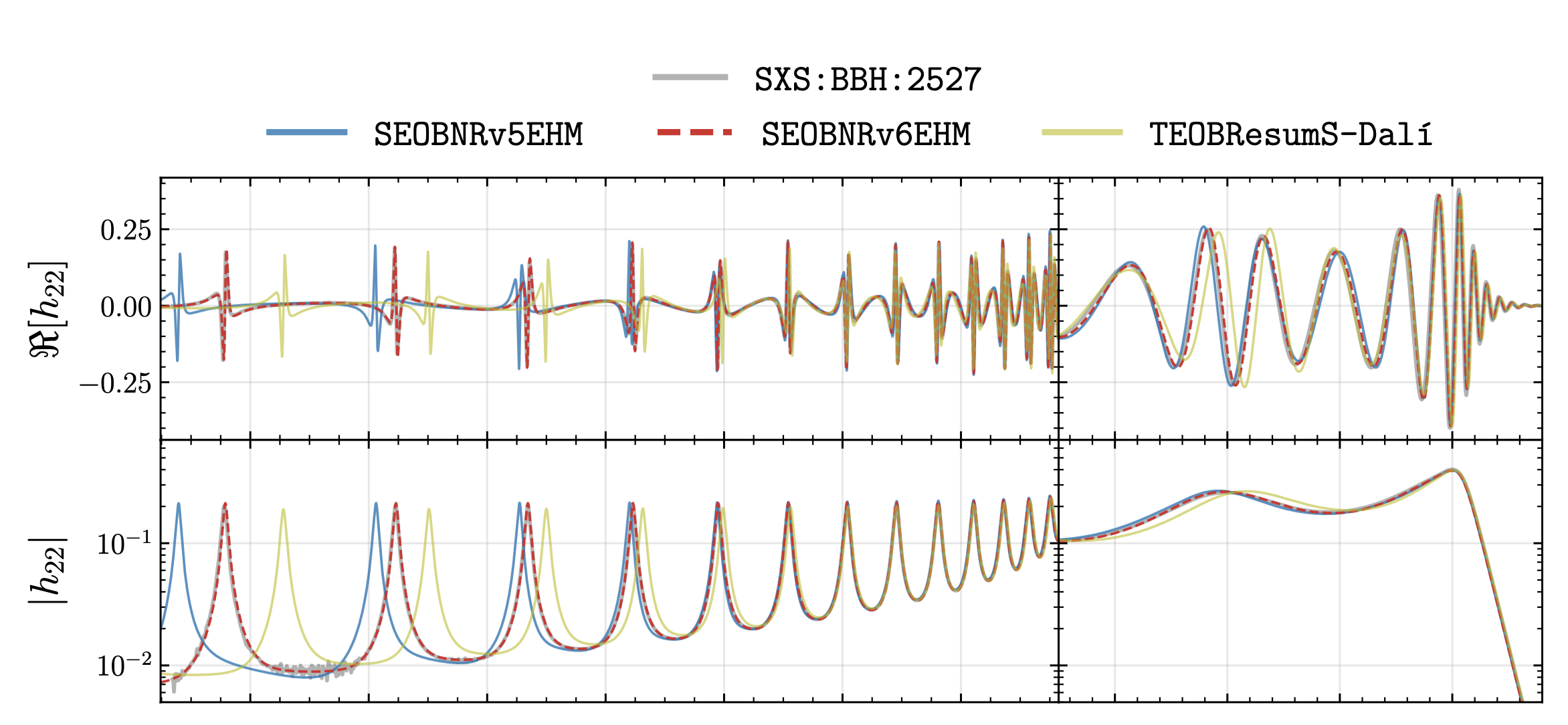
I work on developing accurate and efficient models for the gravitational radiation emitted by coalescing compact binaries, both within General Relativity (GR) and in modified gravity theories, focusing on effective-one-body (EOB) models and their improvement through numerical relativity (NR). I am one of the main developers and a maintainer of the pySEOBNR python package, which underpins the SEOBNR family of waveform models widely used in LIGO-Virgo-KAGRA analyses.
Additionally, I am interested in using these models to address open questions in fundamental physics and astrophysics. I employ them for Bayesian parameter estimation and tests of GR using data from current gravitational-wave detectors, LIGO, Virgo, and KAGRA. Some of the topics I am interested in include black-hole spectroscopy, parameter estimation for binaries in generic orbits, and understanding how waveform-modeling uncertainty propagates into astrophysical inference and how to account for it. I also make forecasts for next-generation detectors, including LISA and the Einstein Telescope, focusing on the challenges and accuracy requirements these future instruments will face.
More recently, I have been working on applications of artificial intelligence and machine-learning techniques to gravitational-wave data analysis and waveform modeling. This includes extensions and applications of the DINGO framework for simulation-based inference (neural posterior estimation), and machine-learning methods for the NR-calibration of waveform models.
Research highlights
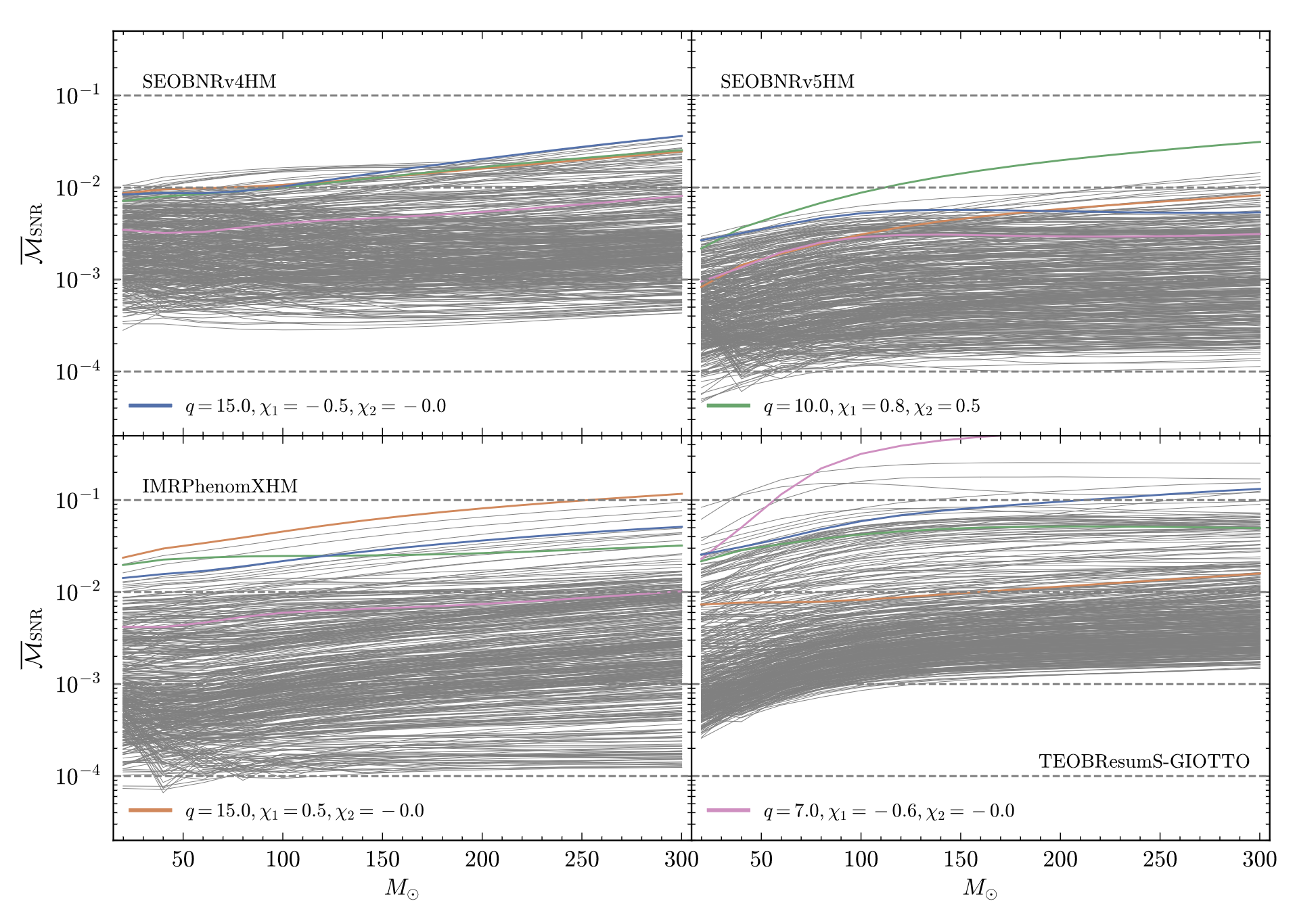
I led the development of SEOBNRv5HM, an accurate and efficient effective-one-body model for binary black holes that anchors the SEOBNRv5 family now widely used in LIGO-Virgo-KAGRA analyses.
Read the paper ↗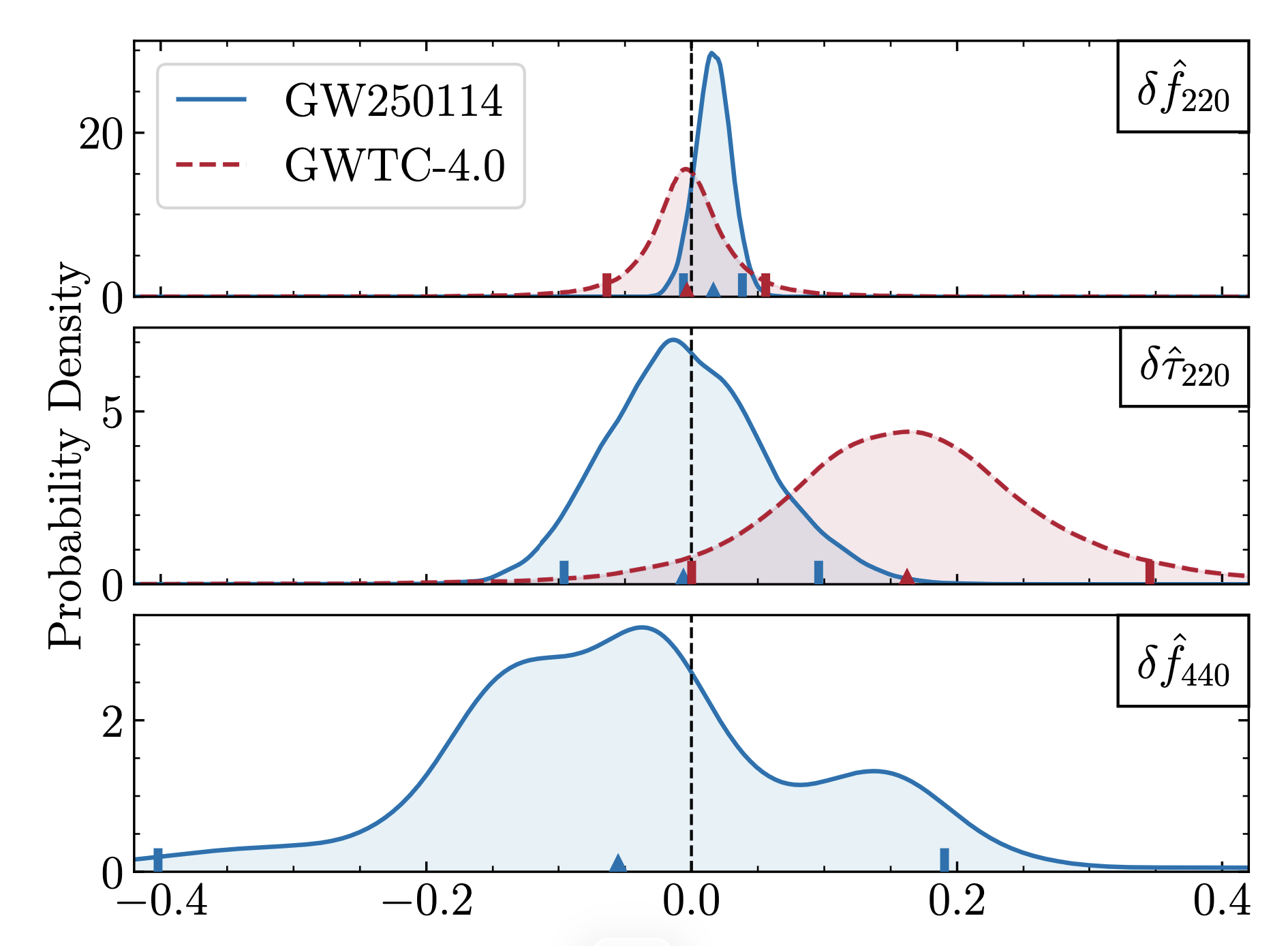
Using the loudest gravitational-wave signal observed to date, we constrained multiple quasi-normal modes of the remnant black hole and performed a suite of tests of general relativity, finding more stringent constraints than those obtained by combining dozens of previous events.
Read the paper ↗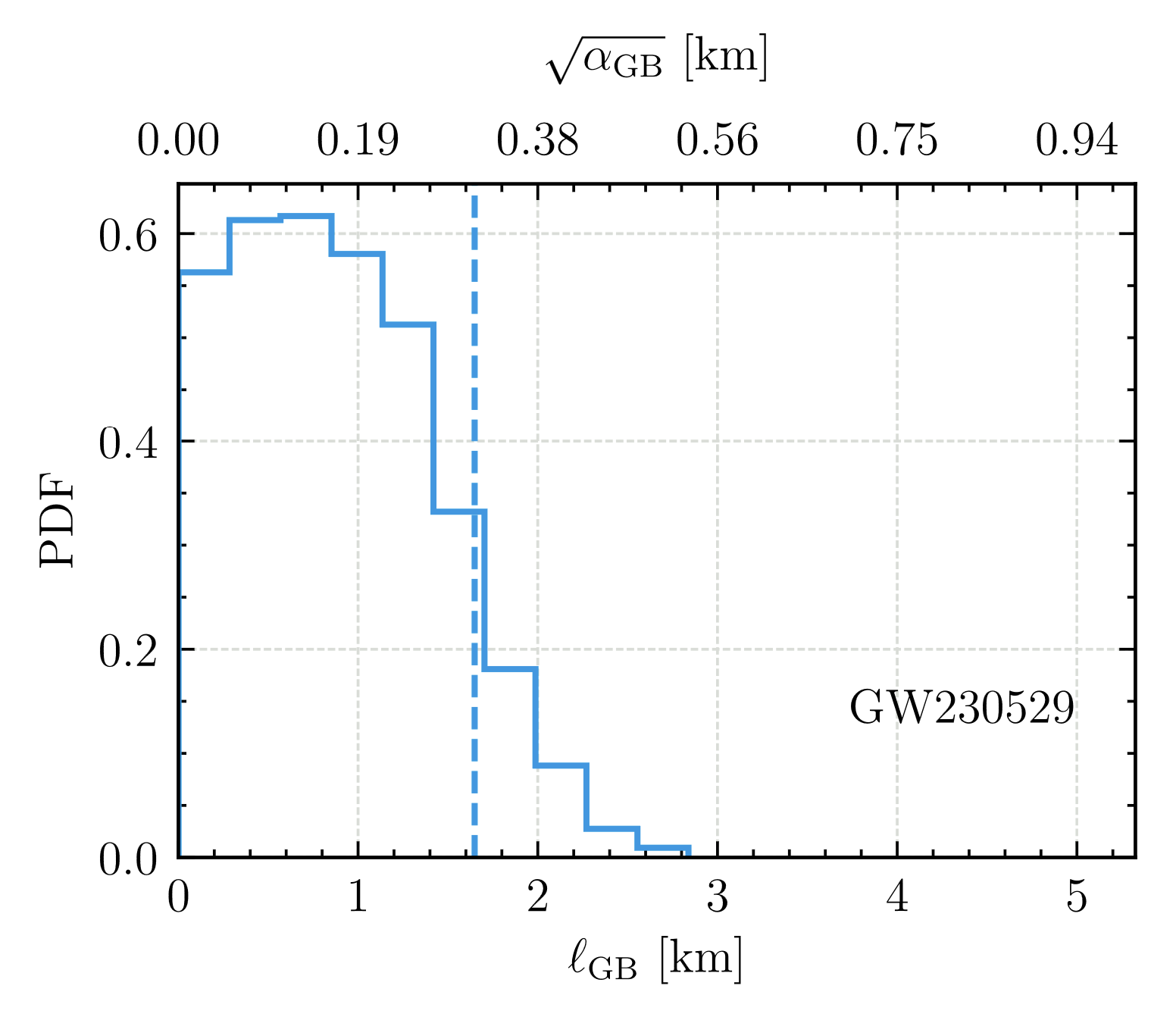
We built the first inspiral-merger-ringdown waveforms for binary black holes in Einstein-scalar-Gauss-Bonnet gravity within the effective-one-body formalism, enabling tests of this modified-gravity theory with real gravitational-wave data.
Read the paper ↗